
Advertisements
New EU Entry/Exit System Is Now Fully Operational
Daniel Riley May 29th, 2026 600 views
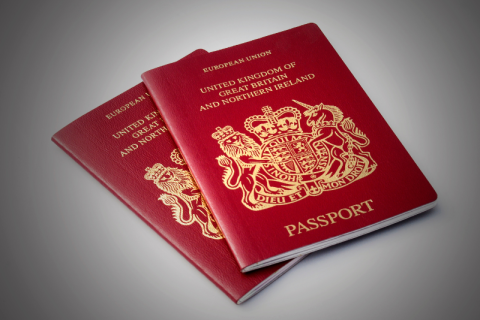
UK Passports. Picture Credit: Canva
If you're planning a trip to Europe this year, there's one change you need to be aware of before you travel. As of 10 April 2026, the EU's new Entry/Exit System (known as EES) is fully operational, and it affects every non-EU traveller crossing into a Schengen Area country, including British passport holders.
The EES replaces the traditional physical passport stamp with a digital registration process. The first time you cross a Schengen border under the new system, you'll need to have your passport scanned, provide a facial image, and submit your fingerprints. Dedicated EES machines have been installed at airports, ferry terminals, and Eurostar terminals to handle the checks. Once your biometric data is on record, subsequent crossings will simply verify what's already stored, so the first visit takes a little longer, while future entries should be quicker in principle.
The system has been rolling out progressively since last October, and most countries were already registering around 75% of arrivals ahead of this week's full implementation. When operating smoothly, the European Commission expects each check to take approximately 70 seconds per person. The 29 participating countries also retain some flexibility to avoid excessive queues, which may become relevant as summer travel picks up.
That flexibility may well be needed. Industry leaders have raised genuine concerns about the timing of the full rollout. Since the phased introduction began last October, there have already been reports of hours-long delays at busy European airports, particularly in Spain and the Canary Islands, with some passengers missing flights because the checks took too long. The worry now is that with every passenger required to register from 10 April, those delays could get worse before they get better.
Julia Lo Bue-Said, CEO of Advantage Travel Partnership, has called for checks to be suspended during the busiest periods to prevent queues compounding over summer.
"We are already seeing that even off-peak travel has presented challenges," she said, "and introducing EES during the busy summer period risks compounding disruption at a time when customer confidence is so critical."
Her recommendation is a flexible suspension option during peak travel months, which would allow authorities to properly assess operational pressures, ensure consistent readiness across member states, and increase staffing at key border points before scaling up further.
In practical terms, the most important thing you can do is build in more time than usual. Allow for longer waits at passport control, especially if you're travelling through busy airports or during peak summer periods. If you're flying out of a European airport, head to passport control as soon as you've cleared check-in and security, so the EES checks are done with time to spare before your gate.
The usual advice to arrive at least two hours before a flight from Europe applies as a minimum, but it's worth checking with your airline and airport for any updated guidance specific to your departure point.
The EES is part of a broader effort to modernise Europe's external borders, and the intention over time is for it to make crossings more efficient and more secure. For now though, the honest advice is straightforward: plan ahead, give yourself more time than you think you need, and don't treat passport control as something to squeeze in at the last minute this summer.
Search Our Blog
Share this article
Related Posts


Recent Posts



Most Read Posts



Advertisement
Advertisements